
- Your cart is empty
- Continue shopping
-
aminulofficial07
- Posted on
- Categories:Everyday Style
- 0 comments
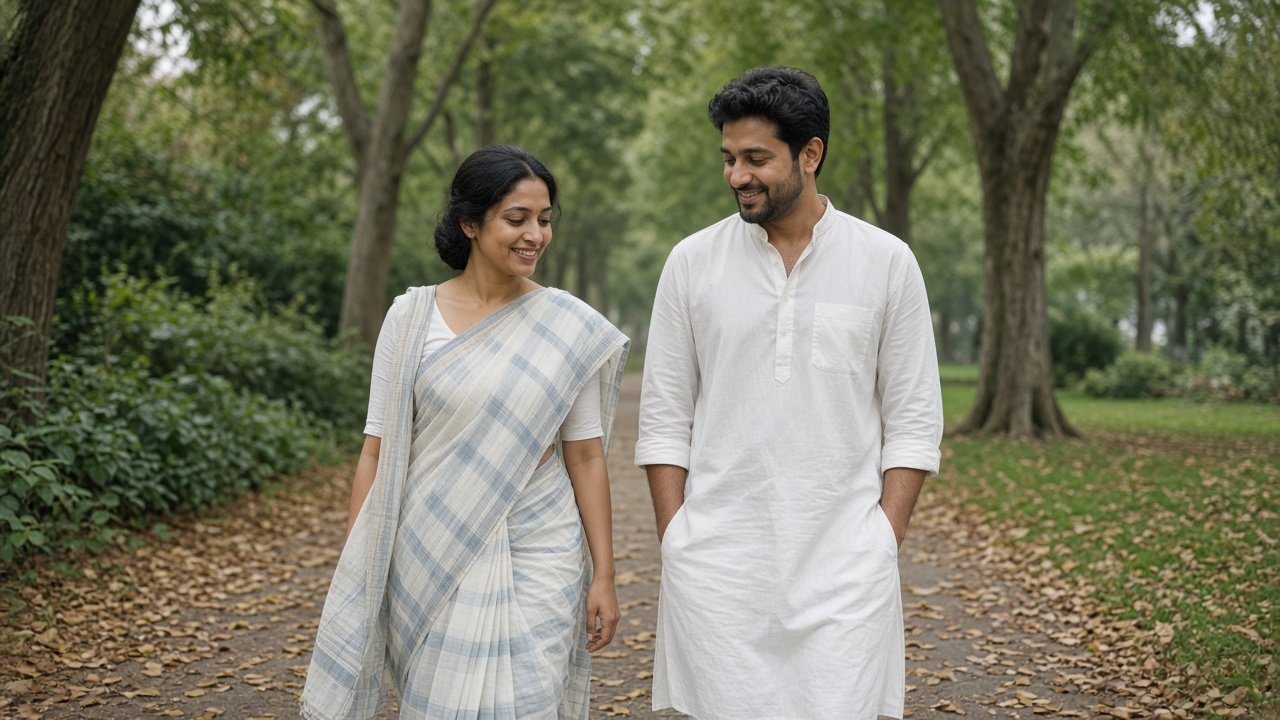
Comfortable Bangali clothes are not a lesser version of formal wear. They are the pieces you can cook in, commute in, sit on the floor in, and still feel properly dressed when someone arrives at the door. In the UK that also means clothes that work under a coat, on public transport, and in rooms that are too warm or too cold.
This guide focuses on everyday fabrics and cuts for women and men: cotton sarees and sharees, three piece suits, kurtis, panjabi and simple T-shirts. The aim is not to push you towards one “correct” outfit, but to help you choose pieces you will actually wear more than once. You can browse the everyday category alongside sarees, three piece and men’s panjabi.
What “comfortable” means in practice
A comfortable garment does a few ordinary things well. You can sit and stand without adjusting it every few minutes. The fabric does not scratch, cling in a way you dislike, or become transparent in daylight. The waistband or drawstring stays put. You can raise your arms. If you wear a coat, the outfit still looks whole when the coat comes off.
Formal embroidery, stiff structure and very delicate weaves have their place, but they fight those everyday tests. That is why cotton, tant, lawn and mid-weight jersey appear so often in a practical wardrobe. They are not automatically comfortable — a poorly cut cotton kameez can be as awkward as a stiff silk — but they give you a better starting point.
Weather matters as well. A fabric that feels perfect in a short indoor visit can feel heavy on a warm British summer day, or insubstantial in a draughty hall. Everyday dressing is a climate decision as much as a style one.
Everyday options for women
Cotton and tant sarees
A cotton or tant saree can be entirely practical once you have a reliable drape and a fitted blouse. The cloth usually grips a petticoat better than georgette, and it is cooler than many formal silks. It is a strong choice for family days, informal gatherings and any event where you want a traditional look without formal weight.
It is less convenient if you are still learning to drape, or if your day involves a lot of travel and you will not have time to reset pleats. In those cases a pre-draped cotton piece, or a three piece instead, may be the more comfortable decision. For the drape itself, see How to Wear a Saree. For fabrics and spellings, see Sharee, Saree or Sari?.
Three piece suits
For many women, a cotton or lawn three piece is the easiest everyday traditional outfit. The kameez and bottom are already stitched, the orna can be worn loosely or more neatly, and you can sit, walk and carry bags without managing a long unstitched drape. A straight or softly flared kameez with a salwar or simple trouser is usually easier than a wide palazzo for commuting and school runs.
If you want a clearer explanation of the set — and of names such as salwar kameez — read What is a Three Piece Suit?. Start with mid-weight cotton and modest or no embroidery if comfort is the priority.
Kurtis and simpler tops
A kurti is a practical middle ground: traditional enough for many family settings, simple enough to wear with trousers, jeans or a salwar. Look for a shoulder that sits correctly, a neckline you can wear all day, and a length that does not ride up when you sit. Pairing a comfortable kurti with a well-fitting bottom often gets more weekday use than a formal three piece that you are saving for events.
Browse kurtis when you want this simpler layer, and keep heavier anarkali cuts for occasions where you want more volume.
Everyday options for men
A cotton panjabi is the everyday counterpart to an Eid piece. Choose a mid-weight fabric you cannot see through, a length that does not bunch badly when you sit, and a collar you can wear for hours. Save dense embroidery for celebrations. The same garment type can be formal or comfortable; the fabric and finish do most of the work. Best Panjabi Styles for Eid covers the more formal end of the same family.
A simpler kurta can be even easier if you prefer a slightly different cut or a lighter cloth. For errands, informal visits and warm days, a well-made cotton T-shirt — including a Bangali or desi-print tee, if the artwork is original and the cloth is decent — is a valid everyday option. It is not a substitute for a panjabi at a formal event, but comfort includes having something to change into when the formal piece comes off.
The wider men’s landscape is set out in Bangali Men Clothes: Panjabi, Kurta, Sherwani and T-Shirts.
Fabrics that usually earn their place
Cotton and tant remain the most reliable everyday fabrics: breathable, familiar, and relatively easy to wash. They crease, so hanging them after washing matters.
Lawn and lighter cotton blends feel good in warmer rooms and in summer, but can be more transparent. Check the cloth in daylight, and add a suitable underlayer if needed.
Linen and linen-blend pieces can be very comfortable in heat, with a more rumpled look that not everyone wants for formal family photographs.
Mid-weight jersey or knitted cotton suits T-shirts and some casual tops. The quality of the knit matters; a thin, stretchy cloth loses its shape quickly.
Georgette, stiff silk, heavy embroidery and sequins are usually poor everyday fabrics. Keep them for the events they were made for.
If a product page is vague about fibre content, ask before you buy. “Soft”, “luxury” and “silk-feel” are not the same as a fibre list.
Fit, layering and UK life
Comfort disappears if the size is wrong. Use a tape measure and the size guide rather than guessing from a high-street size. UK and subcontinent charts often differ.
Think about layers. A kameez or panjabi that fits well on its own can feel tight under a jumper or waistcoat. A trouser that is perfect with sandals can be too long with winter shoes. If you walk or take the bus, check hem length against the shoes you actually wear.
At home, looser cuts and softer waistbands matter more than a sharp silhouette. For work or a shop visit, a slightly cleaner line in the same comfortable fabric is often enough. You do not need a separate “outside” wardrobe if the everyday pieces are well cut.
Care that keeps comfortable clothes wearable
Everyday clothes only stay comfortable if they can be washed and worn again without fuss. Prefer pieces whose care label you will actually follow. A cotton three piece you can wash on a gentle cycle will serve you better than a “casual” set that is dry clean only.
Unpack deliveries, hang the garments, and try them on in daylight. If the fabric itches or the colour is not what you expected, use the returns window rather than hoping the piece will soften after one uncomfortable day.
Building a small everyday rotation
A practical Bangali everyday wardrobe is usually small:
- One or two cotton three piece sets, or a kurti and trouser combination, that you can wash and wear in rotation.
- One cotton or tant saree if you like wearing one and can drape it with confidence.
- One cotton panjabi for men, plus a casual T-shirt or simple kurta for off-duty days.
- One slightly smarter piece for last-minute invitations, so the everyday clothes are not forced into a formal role.
Add new clothes for women — or the equivalent on the men’s side — only when something in that list is missing, worn out, or the wrong size.
Frequently asked questions
What are the most comfortable Bangali clothes for everyday wear?
For many women, a cotton or lawn three piece or a well-cut kurti. For many men, a mid-weight cotton panjabi or kurta. A cotton saree can be comfortable too once the drape is reliable.
Can a saree be comfortable for all-day wear?
Yes, if the fabric is a mid-weight cotton or tant, the blouse and petticoat fit, and you are confident in the drape. Light georgette and heavy silk are harder for a long, busy day.
Are embroidered clothes uncomfortable?
Not always. Light, well-finished embroidery on a breathable base can be fine. Dense, scratchy or heavily beaded work is usually a poor everyday choice.
What should I wear at home and still be able to receive guests?
A clean, well-fitting cotton three piece, kurti or panjabi in a simple colour will usually do both jobs. Extreme loungewear and extreme formalwear both fail that test.
How should everyday clothes be washed?
Follow the care label. Many cotton everyday pieces take a gentle wash and a line dry or low heat. Anything with delicate embroidery, mirrors or unstable dye may need a more careful method.
