
- Your cart is empty
- Continue shopping
-
aminulofficial07
- Posted on
- Categories:Men’s Style
- 0 comments
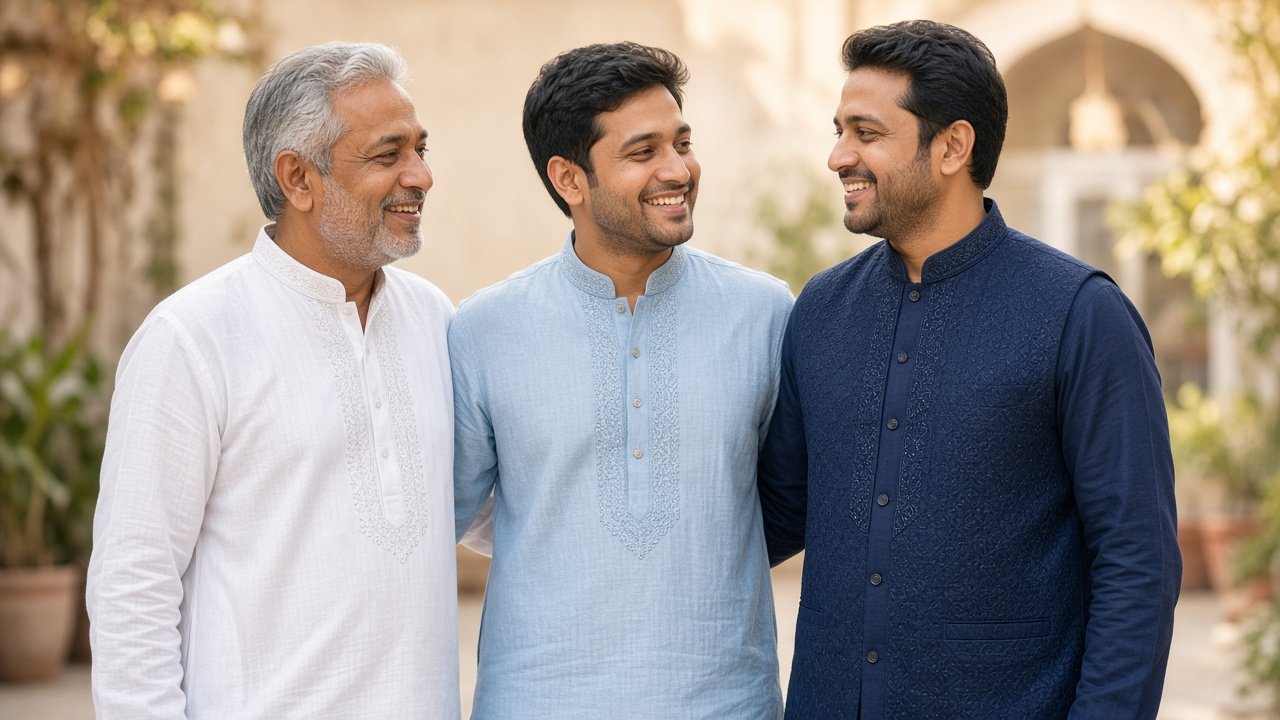
Eid dressing in the UK has to work in more than one setting. You may start at home, walk or drive to the mosque, stand for greetings, sit for a meal, and still be in the same outfit for photographs later in the day. A panjabi that looks formal in a fitting-room mirror but feels stiff after two hours is not a good Eid choice, however rich the embroidery.
This guide sets out the main panjabi styles UK shoppers look for at Eid, how they differ from a kurta or a sherwani, and what to check for fabric, fit and layering. When you are ready to browse, start with men’s panjabi and the seasonal Eid edit. For the wider men’s range, see Bangali Men Clothes: Panjabi, Kurta, Sherwani and T-Shirts.
The word itself appears in more than one form. In many Bangladeshi and British-Bangladeshi households the usual name is panjabi. You will also see punjabi, punjabi kurta, and kurta used for similar long shirts. Shops do not always file them in the same way, so it is worth reading the product description, not only the category name.
What makes an Eid panjabi different from an everyday one
An everyday panjabi is often cotton or a cotton blend, with little or no embroidery, and a cut you can sit and travel in without fuss. An Eid panjabi is not a different garment type; it is usually the same silhouette made a little more finished. That might mean a finer cotton, a jamdani or textured weave, tone-on-tone embroidery at the collar and chest, or a clearer colour than you would wear to work.
The better question is not “how ornate can it be?” but “where will I wear it, and for how long?” A heavily embroidered piece can be right for an evening gathering and less comfortable for a warm prayer hall or a long car journey with children. A plain, well-cut cotton panjabi can look considered if the colour is fresh, the length is right, and the trousers or pajama sit cleanly.
Weather is part of the decision. Eid can fall in cool British spring weather or in high summer, depending on the year. A light cotton or jamdani will feel very different under a coat from a dense embroidered fabric. If you expect to add a jacket, waistcoat or coat, choose a panjabi that still looks complete when the extra layer comes off.
Cotton and everyday-formal styles
Cotton remains the most practical starting point for Eid in the UK. It breathes, it is easier to care for than many formal mixes, and it photographs cleanly in daylight. Look for a mid-weight cloth that is not see-through and not stiff. A slightly textured cotton can hide creases better than a very smooth poplin, which matters if you will be sitting and standing all day.
Collar style changes the mood. A classic band collar (often called a mandarin or Chinese collar in product lists) is the standard formal look. A slightly open neck can feel more relaxed, and may be more comfortable if you run warm. Neither is “more correct”; it is a question of the rest of the outfit and of personal comfort.
Colour is more flexible than people sometimes assume. White, cream, ivory and pale grey are familiar Eid choices because they read as fresh and work with many waistcoats. Deep navy, bottle green, maroon and black can look just as considered, especially if the event runs into the evening. The main caution is contrast: if you add a printed waistcoat, a quieter panjabi usually sits better underneath.
Shop men’s panjabi first if you want this core style, then add a waistcoat only if you know you will wear one.
Embroidered and formal panjabis
Embroidery is the usual way a panjabi is stepped up for Eid, a wedding meal or a formal visit. It is often concentrated at the collar, placket and chest, sometimes with a little at the cuffs. All-over embroidery looks richer but adds weight and can feel scratchy if the underside is unfinished. Turn the garment if you can, or ask the shop about the reverse, especially if you have sensitive skin.
Tone-on-tone embroidery (white on white, or cream on ivory) reads as formal without being loud. Contrasting thread — gold, black, or a second colour — makes a stronger photograph and can date more quickly if the style is very of-the-moment. Either can work; the more detailed piece is simply harder to wear again after Eid.
If you are buying online, look for close photographs of the embroidery, not only a studio front shot. Scale is easy to misjudge. A motif that looks modest on a model can dominate a slighter frame, or disappear on a broader chest.
Jamdani and textured weaves
A jamdani panjabi uses a figured weave rather than (or as well as) surface embroidery. The pattern is part of the cloth, which can look refined in person and in daylight photographs. These pieces often feel lighter than a densely embroidered panjabi, which makes them a strong option if you want something special without much weight.
As with jamdani sharees, the quality of the weave matters more than the word on the label. Look for a clear description of the fabric and, if possible, a close image of the motif. Treat “jamdani style” as a design note, not automatically the same thing as a traditional jamdani weave.
Prints, casual cuts and what to leave for another day
Printed panjabis and softer, shorter cuts have a place, especially for informal family gatherings later in the day or for younger wearers who do not want a rigid formal shirt. They are not the first choice if you need a single outfit to carry you from prayer to a formal meal.
A desi-print T-shirt is even more clearly casual. It can be a comfortable second change for visiting family in the evening, but it is not a substitute for a panjabi if you want a traditional Eid look.
If the event is a wedding rather than Eid, you may be choosing between a formal panjabi, a kurta set and a sherwani. A sherwani is a longer, more structured coat-like garment and sits at a different level of formality. It is usually more than you need for Eid unless that is already your family’s custom.
Fit, length and layering
Fit does more for an Eid photograph than an extra inch of embroidery. The shoulder seam should sit at the shoulder, not halfway down the arm. The chest should be comfortable when you raise your arms. The length is typically mid-thigh to the knee; too short can look unfinished, too long can bunch when you sit.
Sleeves should reach the wrist without covering the hand. If you plan to wear a watch, try the cuff with the watch on. Trousers or pajama should be long enough to break cleanly at the shoe, and the waistband should stay put when you sit on the floor or in a car.
UK and subcontinent sizing do not always match. Use a tape measure and the size guide rather than guessing from a high-street shirt size. If you are between sizes, consider how you will layer: a close panjabi under a waistcoat is different from a panjabi worn alone.
For cooler Eid mornings, a simple wool or wool-blend coat over a pale panjabi is often cleaner than a bulky casual jacket. If you add a waistcoat, keep the panjabi fabric from competing with the waistcoat fabric — one textured piece at a time is usually enough.
Care and timing
Order early enough to allow for a size exchange, especially if Eid falls close to a weekend delivery cut-off. Read Delivery & Returns before you rely on a last-minute order.
Check the care label as soon as the parcel arrives, not the night before. Some embroidered and mixed-fibre pieces are dry clean only. Cotton panjabis may take a gentle wash, but embroidery and dark colours can need more care. Hang the garment as soon as you can so the creases drop, and keep the receipt and tags until you are sure of the fit.
Comfort still counts on a celebration day. If you want a wider view of everyday fabrics and easier cuts, see Comfortable Bangali Clothes for Everyday Wear.
Frequently asked questions
Is a panjabi the same as a punjabi or a kurta?
They overlap. Panjabi is the name used in many Bangladeshi households for a men’s long shirt. Punjabi and punjabi kurta appear on many UK product pages for a similar garment. Kurta is a broader term and can include slightly different cuts and lengths. Always check the actual shape, length and fabric.
What is the best fabric for an Eid panjabi in the UK?
There is no single best fabric, because Eid weather and the day’s plans vary. Mid-weight cotton is the most reliable all-rounder. Jamdani and light textured weaves work well if you want more interest without much weight. Heavy embroidery is better when you know you will be indoors and can bear the extra layer.
Should I wear a waistcoat with a panjabi for Eid?
Only if you like the look and will be comfortable in it for hours. A well-cut panjabi in a clear colour can be enough. If you do add a waistcoat, keep one of the two pieces quieter than the other.
Can I wear the same panjabi to a wedding later in the year?
Often yes, especially if the embroidery is not extremely seasonal. A cleaner cotton or tone-on-tone piece is easier to wear again than a very heavily decorated one. For wedding-level formality, compare with a sherwani before you buy a second similar panjabi.
How early should I order an Eid panjabi online?
Early enough to try it on and use the returns window if the size is wrong. Do not count on a last-minute delivery without reading the shop’s cut-off times, especially around bank holidays.
