
- Your cart is empty
- Continue shopping
-
aminulofficial07
- Posted on
- Categories:Men’s Style
- 0 comments
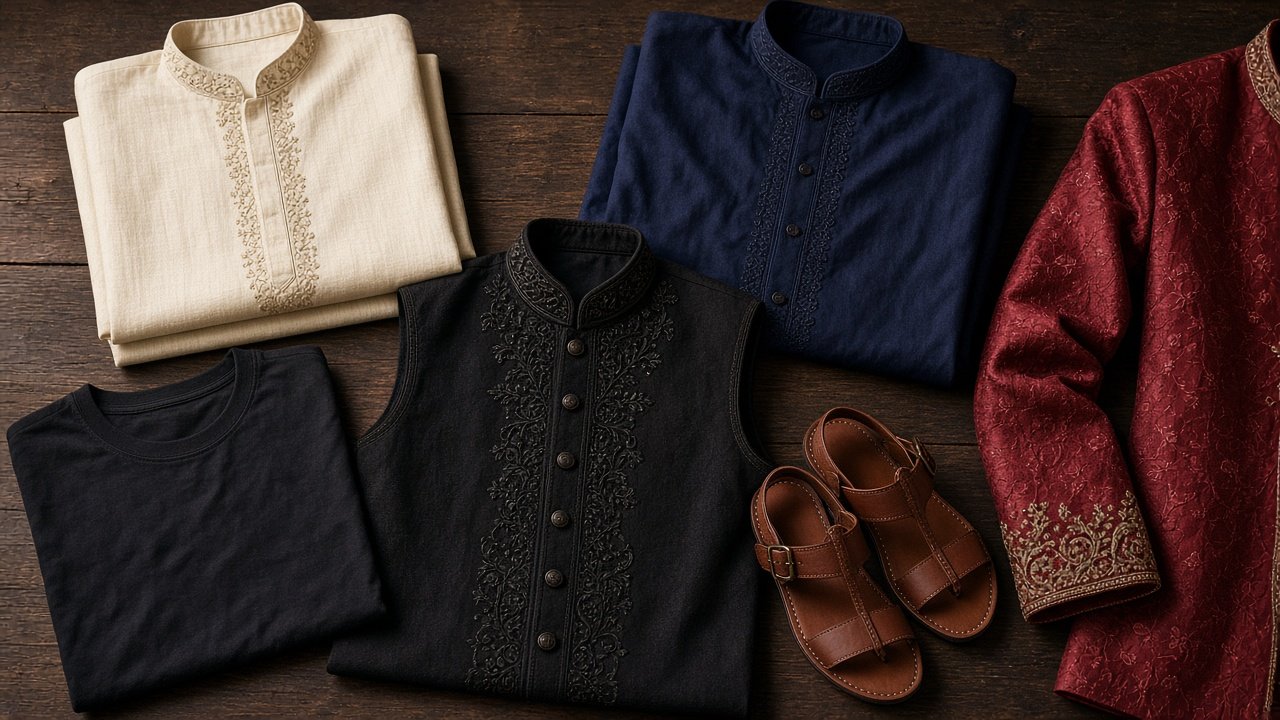
Bangali men clothes cover more than one garment and more than one level of formality. A cotton panjabi, a kurta, a sherwani, a waistcoat and a simple T-shirt can all belong in the same wardrobe. They are not interchangeable. The useful skill is knowing which one the day actually asks for, and buying fewer, better pieces rather than several almost-identical formal shirts.
This guide maps the main men’s categories at Bangali Shop, explains how the names overlap, and sets out fit and fabric checks that matter as much as embroidery. Start with the men’s hub, then go directly to panjabi, kurta, sherwani, waistcoats or T-shirts.
Panjabi, punjabi and kurta: related, not always identical
In many Bangladeshi and British-Bangladeshi households, panjabi is the everyday word for a men’s long shirt worn with pajama, trousers or a similar bottom. UK product pages often use punjabi, punjabi kurta or kurta for a similar idea. The overlap is real, but the cut is not always the same.
A panjabi is typically a straight or gently shaped long shirt with a band collar, worn at mid-thigh to knee length. A kurta can describe that same shape, or a slightly different length, neckline or side split, depending on the maker. When you shop, ignore the fight over the name and look at the photograph and the measurements: collar, length, sleeve, and whether the side vents are high or modest.
If you want one core traditional garment, a well-cut cotton panjabi will do more days of the year than a heavily embroidered piece you are afraid to wash. Keep a second, slightly more finished panjabi for Eid and formal invitations. Best Panjabi Styles for Eid goes into that choice in more detail.
Sherwani and waistcoats: stepping up the formality
A sherwani is a longer, more structured garment, closer to a coat than to a daily shirt. It is the usual choice when the event is a wedding and you need a clearly formal silhouette. It is usually more than you need for Eid, Friday prayer, or a family dinner, unless that is already your custom.
Because a sherwani is structured, fit is unforgiving. The shoulder must sit at the shoulder. The chest must allow you to raise your arms and sit. The length should look intentional, not awkward at mid-calf or oddly short. Many sherwanis are worn with a kameez or kurta underneath and with churidar or fitted trousers. If you are ordering online, compare those layers with the size guide before you buy.
A waistcoat is a more flexible way to formalise a panjabi or kurta without committing to a sherwani. It works well for Eid photographs, receptions and any event where you may want to remove a layer later. Keep one of the two pieces quieter: an embroidered waistcoat over a busy panjabi is usually too much, while a plain waistcoat over a textured or lightly embroidered panjabi often looks considered.
T-shirts and casual days
Men’s T-shirts belong in this wardrobe too, especially for everyday wear. A cotton tee is the comfortable change after a long formal day, and it is a reasonable outfit for informal visits, travel and warm weather. At Bangali Shop the T-shirts category is reserved for simple cotton pieces and for original Bangali or desi-print designs — not for copies of someone else’s artwork.
A printed tee is still a casual garment. It does not replace a panjabi at a formal Eid prayer or a wedding. Worn with care, it can still express identity in daily life, which is a different job from ceremonial dress.
If comfort is your first filter, read Comfortable Bangali Clothes for Everyday Wear as a companion to this guide.
Choosing by occasion
Everyday and family visits. Mid-weight cotton panjabi or kurta, or a well-made T-shirt if the setting is informal. Avoid heavy embroidery.
Eid. A fresh cotton, jamdani or lightly embroidered panjabi, with or without a waistcoat. Colour can be pale or deep; cleanliness of cut matters more than how much decoration is on the chest. See the Eid edit when it is available.
Weddings. Match the formality of the function. A refined panjabi or kurta set can be enough for some daytime events. A sherwani is the stronger choice when the dress code is clearly formal, or when you are in the wedding party. The wedding category is the place to compare those looks.
Work and mixed days. Some men wear a simple panjabi or kurta in professional or semi-formal settings; others prefer to keep those garments for family life and wear a T-shirt or ordinary shirt the rest of the time. Either is fine. The garment should be in a fabric you can sit in, and in a colour that still looks tidy at the end of the day.
Fabric, season and care
Cotton is the most useful fabric across almost all of these categories. It breathes, it photographs cleanly, and everyday pieces can often be washed at home. Jamdani and other textured weaves add interest without the weight of dense embroidery. Silk mixes, brocade and heavily embroidered cloths belong mainly in the formal column, and they may be dry clean only.
UK weather should influence the buy. A very light cotton that is perfect in July may need a coat or waistcoat in a cold Eid morning, and a dense fabric that looks rich indoors can be oppressive in a heated hall. If you expect to layer, choose a panjabi that still looks finished when the extra layer comes off.
Check the care label when the parcel arrives, hang the garment, and try it on with the shoes and bottom you will actually wear. If you need to exchange a size, use the Delivery & Returns window rather than waiting until the day of the event.
Fit checks that matter more than the label size
UK and subcontinent size charts often differ, and “large” in one shop is not “large” in another.
- The shoulder seam should sit at the edge of your shoulder.
- You should be able to move your arms forward and up without the chest pulling.
- Sleeve length should reach the wrist, not the knuckles, especially if you wear a watch.
- Shirt length should still look right when you sit.
- Trousers or pajama should stay at the waist and break cleanly at the shoe.
If you are between sizes, decide based on layering: a closer fit can look sharper alone, while a little room is more comfortable under a waistcoat or sherwani.
Building a small men’s wardrobe
Most men do not need a large stack of formal wear. A practical set is usually:
- One everyday cotton panjabi or kurta.
- One slightly more formal panjabi for Eid and invitations.
- One waistcoat if you like that look and will wear it more than once.
- A sherwani only if you attend weddings that actually call for one.
- One or two cotton T-shirts for informal days.
That list is easier to maintain than five similar embroidered panjabis in almost the same colour. When you add something, add it because a genuine gap exists, not because the decoration is new.
Frequently asked questions
What should I search for if I want Bangali men clothes?
Start with panjabi, then try punjabi, punjabi kurta and kurta if the first list is thin. Add sherwani, waistcoat or T-shirt when you know you need that level of formality or casual wear.
Is a panjabi only for Eid?
No. A plain cotton panjabi is an everyday garment in many households. Eid pieces are usually the same silhouette in a finer fabric or with more finished embroidery.
When is a sherwani the right choice?
When the event is formally dressed, often a wedding, and you want a structured, ceremonial look. It is not required for every South Asian celebration.
Can I wear a T-shirt instead of a panjabi?
For informal days, yes. For formal Eid prayers, weddings and similar events, a T-shirt is usually too casual. Keep both in the wardrobe and use them for different jobs.
How do I get the size right when buying online?
Measure your chest, shoulder, sleeve and preferred length, then compare those numbers with the size guide. Do not rely on a high-street shirt size alone.
