
- Your cart is empty
- Continue shopping
-
aminulofficial07
- Posted on
- Categories:Saree Guides
- 0 comments
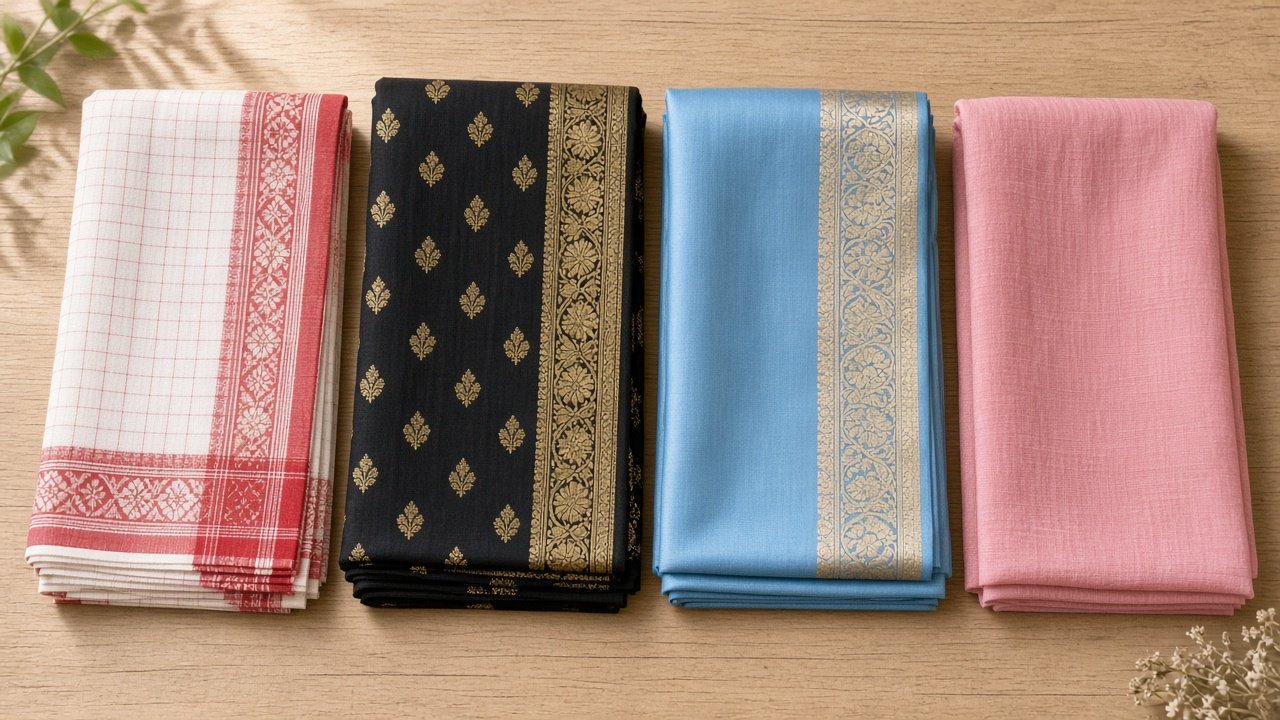
If you have searched for a sharee, a saree and a sari in the same week, you have not made three different mistakes. You have used three spellings of the same garment: a long unstitched drape worn with a blouse and, usually, a petticoat. In the UK, shops, family chats and search boxes do not all agree on one word, which can make online shopping slower than it needs to be.
This guide explains why the spellings exist, how to search so you do not miss a piece, and how fabric and origin matter more than the letters on the label. When you are ready to browse, start with sarees, sharees and saris at Bangali Shop. If you also need the drape itself, keep How to Wear a Saree: A Step-by-Step Guide open in another tab.
Why you will see three spellings
Saree is the spelling you will meet most often on UK product pages, marketplaces and fashion sites. It is the form many search engines and shops standardise on.
Sari is also widely understood, including in older books, some museums and some international retailers. If you type only “sari”, you will still find many of the same garments, but you may also pick up results for other uses of the word, or sites that never use “saree” at all.
Sharee is a common Bangladeshi English spelling. You will see it in conversations, on some Bangladeshi and British-Bangladeshi product lists, and in searches such as “jamdani sharee”. It is not a different item. If a UK shop only files its range under “saree”, a search for “sharee” on that site may return little or nothing, even when the shelf is full.
None of these spellings is “wrong” in everyday use. The practical issue is consistency. A shop that wants to be found for Bangali clothing should mention all three on the category page, in product titles where it is natural, and in a short glossary such as this one. A shopper can do the mirror image of that work: search more than one spelling before deciding that a style is not available.
Bangali Shop treats sharee, saree and sari as the same category, with jamdani, tant and cotton, silk and Banarasi and party or pre-draped styles underneath.
How to search in the UK without missing pieces
Start with the spelling you use at home, then repeat the search with the other two if the first list looks thin. Add a fabric or occasion word rather than adding more spellings to the same query. “Jamdani sharee”, “cotton saree UK” or “pre-draped sari” will usually be more useful than a long string of synonyms.
It also helps to search the type of event and the fabric together. “Wedding saree silk” and “everyday tant saree” describe different garments. Mixing those needs in one query buries the better matches.
Look at the product photos and the fabric description, not only the title. Two listings can use different spellings and still be the same weave. Two listings can share the word “silk” and feel very different in the hand — one a woven silk, another a silky synthetic. If a page is vague, treat that as a reason to ask the shop, not as a reason to guess.
When you compare prices, compare like with like: stitched blouse included or not, fall already attached or not, and whether the length is five yards or six. Those details change both the cost and the drape.
Fabrics you will meet most often
Jamdani
Jamdani is a fine, figured weave strongly associated with Bangladesh, especially the Dhaka region. The motifs are woven into the cloth rather than printed or embroidered on top, which is why a good jamdani has a distinctive texture when you hold it to the light. In UK shops you will see “jamdani sharee” and “jamdani saree” used for the same idea.
Because the cloth is often light, a jamdani can feel cooler than a heavy silk, but it may need a firmer petticoat and a careful shoulder pin. For a first drape, it is wearable, but it is less forgiving than a mid-weight cotton.
Tant and cotton
Tant cotton sarees are everyday workhorses: relatively crisp, often brightly bordered, and usually easier to pleat than silk. They suit long days, family meals and any occasion where you want a traditional look without formal weight. If you are practising the drape, tant or a plain cotton is a sensible first buy.
Cotton also tends to be the more comfortable choice in warm rooms and for travel. If your priority is comfortable Bangali clothes, start here rather than with a stiff tissue or heavily embroidered party piece.
Silk, Banarasi and formal weaves
Silk and Banarasi-style sarees read as formal in most UK settings: wedding guests, receptions, Eid parties and evening events. They take colour richly and hold a structured pallu. They can also be heavier, warmer and more expensive to clean. Read the care label before you buy, and budget time for draping; formal weaves show uneven pleats more clearly.
“Silk” on a label is a starting point, not a complete description. Ask whether the piece is silk, a silk blend, or a fabric that only looks like silk. The answer affects the price, the drape and the aftercare.
Party, georgette and pre-draped styles
Lighter party fabrics — georgette, chiffon and similar — are common for events because they fall softly and pack small. They can slip more easily, which is one reason pre-draped and ready-to-wear sarees have become easier to find in the UK. A pre-draped piece is still a saree in look, but it is a stitched or pre-pleated garment. You gain speed and lose some freedom to change the pallu length.
Origin, style and what “Bangali” can mean here
A sharee can be Bangladeshi in weave, in motif, in the spelling on the packet, or simply in the way a family wears it. Indian and Pakistani workshops also produce sarees that UK shoppers wear to the same events. The useful questions are more specific than a country label on its own: what is the fabric, how was it made, how long is it, and will it suit the occasion?
If you are shopping for a wedding and cannot choose between a saree and a lehenga, the fabric and formality questions in Lehenga vs Saree for an Asian Wedding will help more than the spelling will.
What to check on a product page
Before you add a saree to the basket, look for:
- Length and width, in yards or metres.
- Fabric content, not only a marketing name.
- Whether a blouse piece is included, and whether it is stitched.
- Whether the fall is already attached.
- Care instructions.
- Colour accuracy notes and, if they exist, photographs in daylight as well as studio light.
If you are buying for someone else, confirm blouse size against a size guide rather than a dress size alone. UK and subcontinent measurements do not always line up.
Delivery and returns matter as much as the weave. A colour or border that looks slightly off in person is easier to deal with if you know the returns window before you order. Read Delivery & Returns before you checkout, especially when you are buying for a fixed date.
Building a small, useful wardrobe
You do not need a large stack of sarees to be well dressed for the year. Many people are better served by one comfortable cotton or tant piece for everyday and family events, one jamdani or mid-formal weave, and one clearly formal silk or party option. Add a pre-draped piece only if you know you will be short of time.
That is the same logic as buying new clothes for women in general: fill the gaps you actually have, rather than collecting similar formal pieces you will wear once.
Frequently asked questions
Is a sharee different from a saree?
No. Sharee and saree (and sari) name the same kind of garment. Sharee is a familiar Bangladeshi English spelling; saree is the spelling you will see most often in UK shops.
Which spelling should I use in a search?
Use the one you prefer, then try the others if the results are thin. Adding a fabric or occasion word — jamdani, tant, silk, wedding, pre-draped — is usually more effective than stacking synonyms.
What is the best saree fabric for a beginner?
A mid-weight cotton or tant is usually the easiest to tuck and pleat. Very light georgette and very heavy silk are harder first drapes.
Do I need a different blouse for every saree?
No. A well-fitting blouse in a related colour can work with more than one piece, especially for everyday cotton sarees. Formal weaves and unusual necklines may still need their own blouse, or at least a trial fitting.
Can I wear a saree to an everyday event in the UK?
Yes, if the fabric and drape suit the day. Cotton and tant are the usual starting points. Comfort, weather and how far you need to travel all matter as much as tradition.
