
- Your cart is empty
- Continue shopping
-
aminulofficial07
- Posted on
- Categories:Women’s Style
- 0 comments
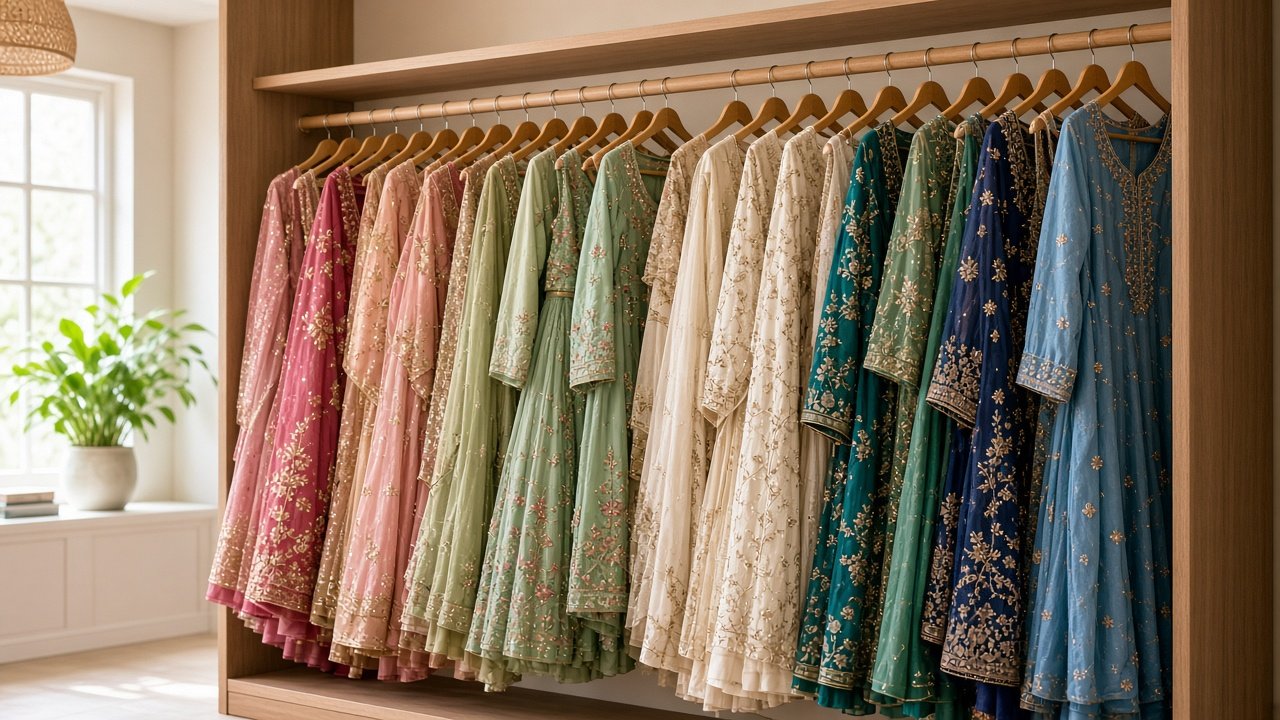
“New clothes for women” is a broad search, and it is often answered with a long grid of whatever has just been photographed. That is not a wardrobe. A more useful approach is to look at the week you actually live — work, family, Eid, weddings, travel, weather — and add only the pieces that fill a genuine gap.
This guide is written for women who wear Bangali and wider South Asian clothing in the UK, whether that is a three piece most days, a saree for events, or a mix of both. It will help you decide what to buy next, not how to collect more of what you already have. When you browse, start with Women > New In and then move into the category you actually need: three piece, sarees, lehengas or kurtis.
Start with a simple wardrobe audit
Before you shop, open the wardrobe and be literal. Which pieces did you wear in the last two months? Which ones have you not touched since the last wedding or the last Eid? Comfort, fit and missing functions matter more than whether something still looks “new”.
Ask four questions of each type of outfit:
- Do I have something comfortable for ordinary days?
- Do I have something suitable for a last-minute family invitation?
- Do I have something formal enough for a wedding or Eid party?
- Does everything I rely on still fit, and is it in a wearable condition?
If the answer to the first question is no, a new embroidered lehenga will not help. If the answer to the third is no, another everyday cotton kameez will not help either. New clothes earn their place when they do a job that is currently unfilled, or when they replace a piece that is worn out or the wrong size.
The everyday foundation
For many women, the most useful new purchase is not the most formal one. A well-cut cotton or lawn three piece — kameez, bottom and orna — will usually get more wear than a heavily decorated set. If you prefer a simpler top, a kurti with a comfortable trouser or salwar can do similar work.
Look for breathable fabric, a shoulder that sits correctly, and a length you can walk and sit in. If you already own three almost identical everyday sets in similar colours, a fourth is not “new” in any useful sense. A different weight for colder or warmer months, or a more reliable fit, is a better addition.
Comfort is part of this foundation. If you want a fuller discussion of fabrics and cuts that last a whole day, read Comfortable Bangali Clothes for Everyday Wear. For the meaning of the set itself, see What is a Three Piece Suit?.
Sarees and sharees: add with a purpose
A new saree is a good buy when you have a gap in fabric or formality, not only when a print is attractive on screen. Typical gaps are:
- A cotton or tant piece for daytime and practice draping.
- A jamdani or mid-formal weave for invitations and Eid.
- A clearly formal silk or party saree, or a pre-draped option if you want the look with less wrapping time.
If you already have two formal silks and no comfortable cotton, the cotton is the more useful “new” item. If you love wearing a saree but find the drape stressful on busy days, a pre-draped piece may fill a real gap. Browse sarees, sharees and saris by type rather than scrolling a mixed grid, and use Sharee, Saree or Sari? if you are comparing spellings and fabrics. For the drape, keep How to Wear a Saree to hand.
A new blouse can also be the missing piece, rather than a whole new saree. A well-fitting blouse in a versatile colour will make existing drapes more wearable than another pallu you have no blouse for.
Event wear: lehengas, anarkali and the wedding question
Lehengas and formal anarkali suits are easy to add and easy to under-wear. They take up space, they can be expensive to clean, and they are often too specific for ordinary invitations. Add one when you have a wedding or a similar event in view, or when you know you attend enough formal functions to justify a reusable piece.
If you are choosing between a lehenga and a saree for a particular wedding, do that comparison first: Lehenga vs Saree for an Asian Wedding. The better new garment is the one you can sit, travel and spend a long day in, at the right level of formality.
An anarkali can sit between a three piece and a lehenga: more volume than an everyday kameez, often easier than a full skirt. It is a sensible “new” event option if you want a stitched outfit with a formal line but do not want to manage lehenga weight.
Be cautious with very bridal colours and very heavy embroidery if you are shopping as a guest. A slightly quieter piece will usually have a longer life in your wardrobe after the event.
Seasonal and practical extras
UK weather changes how useful a new outfit is. A fine lawn set that is perfect in July may need a cardigan, shawl or modest additional layer in October. When you add new clothes, think about the coat you already own and the rooms you actually sit in.
Other practical additions are unglamorous and often more valuable than another printed kameez:
- A petticoat that actually fits, if you wear sarees.
- An orna or dupatta in a versatile colour, if your sets are short of a matching one.
- A modest, comfortable underlayer for lighter fabrics.
- A size refresh if your current pieces pull at the bust or waist.
Check new pieces against the size guide with a tape measure. UK and subcontinent sizing do not always match, and a beautiful new set in the wrong size is not an addition; it is a return. Read Delivery & Returns before you rely on an order arriving close to a fixed date.
How to shop “new in” without being rushed
Treat a New In page as a browsing tool, not as a command to buy. Filter by the category you have already decided you need. Compare fabric, length and care as carefully as you would on any other page. Photographs in studio light can flatter colour; if daylight images exist, look at those too.
Ask whether you would still want the piece in six months, when it is no longer at the top of the list. Event wear can pass this test if the design is not extremely narrow. Everyday wear should pass it easily, because you will put it in the wash and reach for it again.
Original photography and honest stock will matter once the shop’s own range is live. Until a piece is in your hands, the product description, fibre content and measurements are the facts to go on — not adjectives such as “must-have”.
A simple buying order
If you are building or refreshing a wardrobe and can only add a few things, this order is usually the most efficient:
- A comfortable everyday three piece or kurti in a fabric you will wash and wear.
- One mid-formal option: a jamdani or mid-weight saree, or a lightly finished three piece, for invitations and Eid.
- One clearly formal option, chosen for an event you actually have, such as a wedding guest saree or a reusable lehenga.
- The small supporting items — blouse, petticoat, properly fitting bottom — that make the rest wearable.
That order keeps “new clothes for women” connected to real days of the year, which is the point of the search.
Frequently asked questions
What new clothes should I buy first?
If your everyday clothes are thin, start there: a cotton three piece or a well-fitting kurti. If everyday wear is already in good condition, add a mid-formal piece for invitations, then formal event wear only when you need it.
Is it better to buy a new saree or a new three piece?
Buy the one that fills the gap you have. A three piece is usually the more versatile weekday garment. A saree is the better addition if you already have everyday sets and need a drape for events, or if you wear sarees often and enjoy them.
How many formal outfits do I need?
There is no fixed number. Many people are well served by one reusable formal saree or lehenga and one mid-formal option, rather than several heavily decorated pieces in the same role.
How can I tell if a new arrival is worth buying?
Check fabric, measurements, care and whether it does a job your wardrobe is missing. If it only duplicates a piece you already wear, it can wait.
What if I am buying for a girl as well as for myself?
Use measurements, not an assumed size, and prioritise clothes she can walk and sit in. A comfortable three piece is often more useful than a formal set she will wear once, unless a specific event requires one.
