
- Your cart is empty
- Continue shopping
-
aminulofficial07
- Posted on
- Categories:Women’s Style
- 0 comments
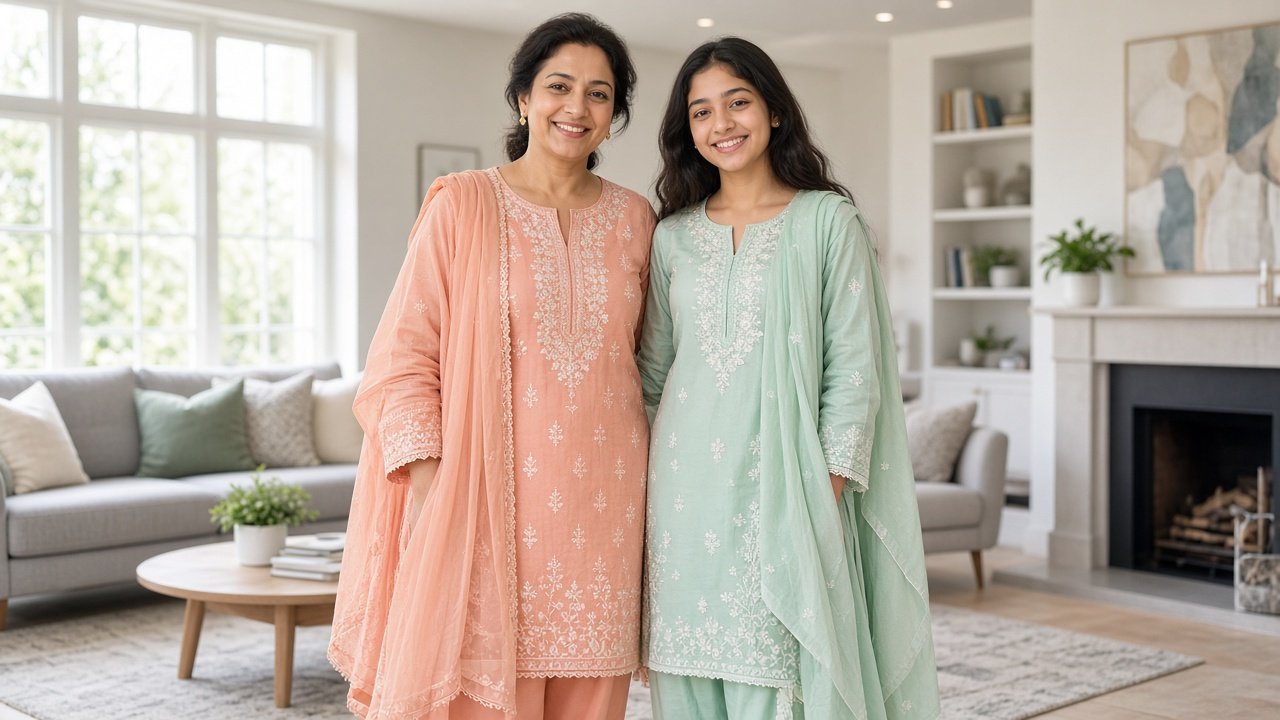
If you grew up around Bangladeshi or broader South Asian wardrobes, “three piece” is probably already clear. If you did not, the name can sound as if it refers to a tailored Western suit with a waistcoat. In this context, a three piece for girls and women is a matching set of three parts: a kameez (the tunic or dress), a bottom, and an orna (a long scarf, also called a dupatta). It is one of the most useful everyday and event outfits you can buy, and it is the garment many UK shoppers mean when they search for a salwar kameez or a “3 piece suit”.
This guide explains the parts, the main silhouettes, how stitched and unstitched sets differ, and what to check for size and fabric. When you are ready to browse, go to Women > Three Piece. Related styles live in anarkali and kurtis. For easier everyday fabrics, see Comfortable Bangali Clothes for Everyday Wear.
The three pieces, named clearly
The kameez is the top. It may be straight, slightly flared, or long and gathered, and it can have a simple neckline or a more formal one with embroidery or lace. Length varies from mid-thigh to mid-calf or lower. A longer, more flared kameez starts to overlap with an anarkali.
The bottom is the second piece. The most familiar is a salwar (also spelled shalwar): a tapered or softly gathered trouser that is comfortable to sit in. Other bottoms include churidar (closer through the leg, often with gathers at the ankle), straight trousers, palazzo (wide-legged), and, for more formal sets, sharara or gharara (wide, divided skirts that read as very festive).
The orna is the third piece: a long rectangular scarf draped over the chest and shoulder, sometimes over the head. In product lists you will also see dupatta. It can be light and everyday, or embroidered to match a party kameez. How you wear it is a matter of comfort, modest covering, and the event.
Together, these are a three piece. A kurti worn alone is not. A saree is a different garment altogether, even though it is also worn with a blouse.
Three piece, salwar kameez, and other names
Shops in the UK do not all use the same label.
- Three piece or 3 piece is widely used by Bangladeshi and British-Bangladeshi buyers and sellers.
- Salwar kameez (or shalwar kameez) usually means the same kind of set, with a salwar as the expected bottom. Some listings use it as a general term even when the bottom is a palazzo or straight trouser.
- Palazzo suit, sharara suit or anarkali suit describe the silhouette more precisely.
- Ready made or stitched means the set is already sewn to a size.
- Unstitched means you receive fabric pieces to be made up by a tailor, which can give a closer fit if you have someone to sew them.
If you are searching, try more than one of these phrases. A shop may file the same garment under “salwar kameez” and never use the words “three piece”, or the other way around. Bangali Shop keeps three piece as the main category so the phrase “three piece for girls and women” has a clear home, with salwar kameez treated as a closely related term.
Everyday sets versus event sets
An everyday three piece is usually lighter: cotton, lawn, linen-blend or a similar breathable cloth, with little or no heavy embroidery. The kameez is cut so you can raise your arms and sit at a table. The orna may be optional in practice, even if it is included in the set.
An event or Eid set is often richer in colour and surface: embroidery, sequins, print mixed with needlework, or a more formal weave. The bottom may be a palazzo or sharara rather than a simple salwar. These sets photograph well and can feel heavier. They are a good choice when you want a complete look without draping a saree or managing a lehenga skirt.
For a wedding, a three piece is often ideal for daytime, mehndi or family events where you need to move. A formal evening may still call for a saree or lehenga; Lehenga vs Saree for an Asian Wedding covers that choice. For Eid, a fresh cotton or lightly embroidered three piece is a strong, comfortable option, and you will find seasonal pieces in the Eid edit when that range is listed.
Fit and sizing
Because a three piece has three parts, fit is about the whole set, not only the kameez bust size.
The kameez should sit cleanly at the shoulder and across the bust without pulling at the fastenings. You should be able to lift your arms. If the cut is fitted at the waist, sit down in it before you decide it works. Length is personal and also practical: a very long kameez can drag if you are shorter, or look abrupt if you are tall.
The bottom needs a comfortable waistband and a length that meets your shoe without pooling. Palazzo and sharara styles need particular care in the length, because a wide leg that is too long is a trip hazard.
The orna should be long enough to drape the way you prefer. If you want more cover, check the width as well as the length.
UK and subcontinent size charts often differ. Measure bust, waist, hip and kameez length, then compare them with the size guide rather than guessing from a high-street dress size. If you are buying for a girl or a younger woman, do not assume that “small” in one brand matches another. Where possible, use measurements.
Unstitched sets are worth considering if a standard stitched size never quite fits you and you have a tailor. They are less helpful if you need the outfit immediately.
Fabric and care
Cotton and lawn are the usual comfortable choices for daily wear and for summer events. They crease more than some synthetics, but they feel better in a warm room. Georgette and chiffon fall softly and are common for party sets; they can be slipperier and may need an underskirt or a well-chosen slip, depending on the cut. Silk and mixed formal fabrics read as dressier and may be dry clean only.
Read the care label before the first wear. Embroidery, mirror work and dark dyes can need a gentle approach. Hang the set as soon as you unpack it, and keep the orna with the kameez so the colour match stays together in your wardrobe.
If you are ordering online, check Delivery & Returns in case the size or the colour in daylight is not what you expected.
How a three piece sits in a wider wardrobe
A well-chosen three piece can do more days of the year than a formal lehenga. Many people are well served by one or two everyday cotton sets and one event set, then adding new clothes for women only when there is a genuine gap — a different climate, a wedding, or a size change.
Girls’ and women’s sets follow the same logic, with the extra need to leave a little room for growth if you are buying for a younger person, or to choose a length she can walk in comfortably.
Frequently asked questions
What is a three piece suit in Asian or Bangali clothing?
It is a matching set of kameez, bottom and orna (dupatta) for girls or women. It is not a Western waistcoat suit.
Is a three piece the same as a salwar kameez?
Often yes. Salwar kameez usually describes a set with a salwar bottom. “Three piece” is the broader household term and can include palazzo, trouser or sharara bottoms as well.
Should I buy a stitched or unstitched three piece?
Buy stitched if you want to wear it as soon as it arrives and a standard size fits you. Buy unstitched if you prefer a tailor to make the set to your measurements and you have time for that.
Can I wear a three piece without the orna?
Some people do, especially at home or in informal settings. For formal events, family gatherings and any occasion where you want a complete traditional look, the orna is part of the outfit. Follow your own comfort and the expectations of the event.
What should I choose for Eid or a wedding guest outfit?
For Eid, a comfortable cotton or lightly embellished set is a reliable choice. For a wedding, match the formality of the event: a richer three piece for daytime, or a saree or lehenga if the evening dress code is more formal.
