
- Your cart is empty
- Continue shopping
-
aminulofficial07
- Posted on
- Categories:Saree Guides
- 0 comments
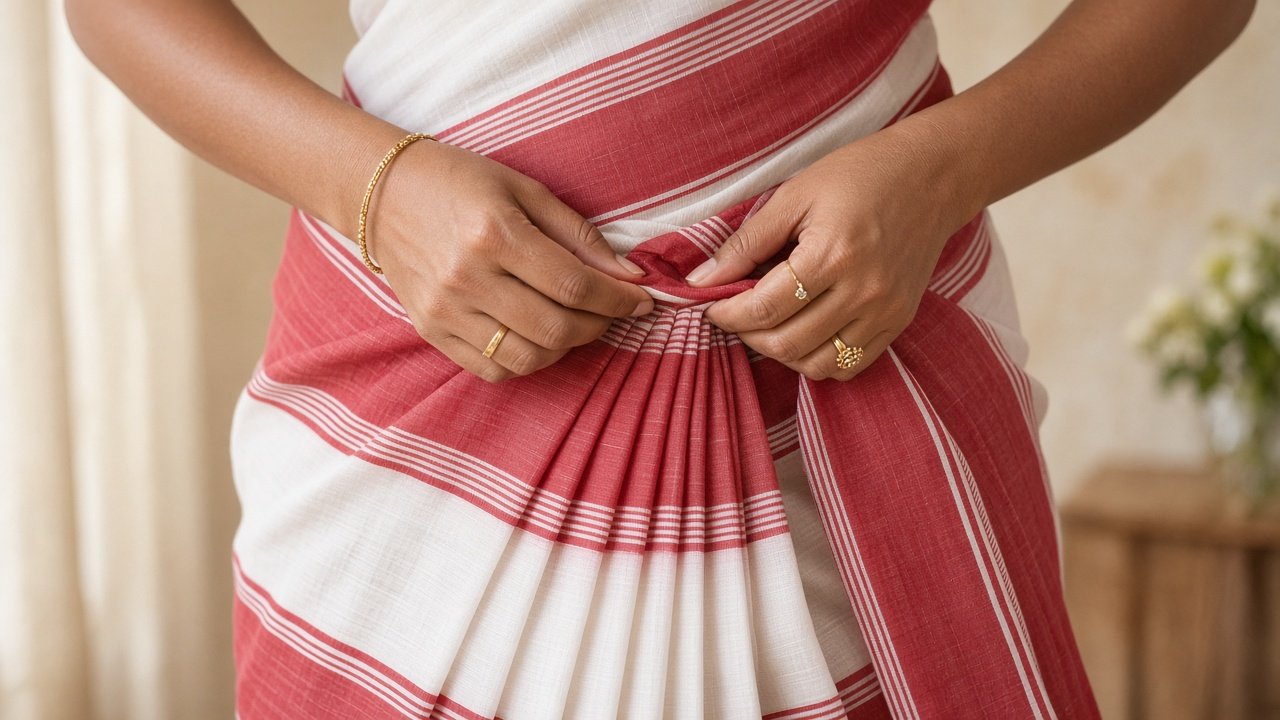
A saree (also spelled sharee or sari) is a long unstitched length of fabric, usually five to six yards, worn with a fitted blouse and a petticoat. The first drape can feel fiddly. This guide walks you through a reliable everyday method, then covers fabric choice, blouse size and the pre-draped options many UK shoppers use for events.
The method below is the widely taught Nivi-style drape: the pallu comes over the left shoulder and pleats sit at the centre front. It is a practical starting point for parties, work and many wedding guest looks. Traditional Bengali drapes, such as the aatpoure style, sit differently and are noted later as a separate option.
If you are still choosing a piece, browse sarees, sharees and saris at Bangali Shop, including jamdani sharees. For spelling and fabric types, see Sharee, Saree or Sari? A UK Shopping Guide.
What you need before you start
You do not need a long list of tools, but the underlayers matter as much as the saree itself.
- The saree. Check the fall (the decorative border along the hem) and the pallu (the decorated end that goes over the shoulder). A cotton or tant saree is usually easier to practise with than a heavy silk or a stiff tissue fabric.
- A petticoat, also called an underskirt. It should sit firmly at the waist, with a drawstring or sturdy elastic, and finish just above the ankle. The colour is often chosen to match the main field of the saree so it does not show at the hem.
- A blouse. A close-fitting blouse with a secure hook, zip or tie makes the pallu more stable. If the blouse is loose, the whole drape can slip.
- Safety pins. Two or three are enough for most drapes: one at the waist tuck, one to hold the pleats, and one at the shoulder.
- A full-length mirror, and space to rest the fabric so it does not drag on a dirty floor.
Set aside twenty to thirty minutes the first time. Later attempts are much quicker.
Step-by-step: a simple Nivi-style drape
1. Put on the blouse and petticoat
Dress in the blouse and petticoat first. Tie the petticoat snugly at your natural waist. If it is loose, the tucked fabric will work its way out as you walk. Check that the petticoat hem is even all the way around.
2. Tuck the starting end at the right waist
Hold the plain starting end of the saree (not the pallu). With the fall at the bottom, tuck this end into the petticoat at your right waist, slightly in front of the side seam. Keep the hem just clear of the floor. Walk a couple of steps to confirm you will not trip.
3. Wrap once around the body
Take the fabric around your back and back to the front, keeping the hem level. This first wrap should sit smoothly, with no diagonal drag. Tuck it into the petticoat as you go, especially at the right hip, the centre back and the left hip.
4. Make the front pleats
You should now have a long remaining length in your left hand, ending in the pallu. From the front, gather even pleats about the width of your hand. Aim for five to seven pleats to start with; you can add more once you are comfortable. Hold the top of the pleats together, even them out, and tuck the bundle firmly into the centre of the petticoat, just below your navel. Pin through the pleats and the petticoat if they feel insecure.
5. Bring the pallu over the left shoulder
The remaining fabric, with the decorated pallu, goes around your back and over the left shoulder. Adjust the length so the pallu hangs down the back to a point you like — often somewhere between the mid-back and just below the hip. The shoulder edge should sit neatly, not bunched.
6. Arrange and pin
Spread the pallu so the border or motif shows clearly. Pin it to the blouse at the shoulder, taking a small bite of fabric so the pin does not show. If you want a more covered look, you can bring a loose end across the front and tuck or pin it at the right waist, but this is optional. Check the front pleats from the side: they should hang straight, and the hem should still clear the floor.
Walk, sit and, if you can, climb a couple of stairs. If anything pulls, adjust now rather than after you leave the house.
Fabric tips for a first drape
Cotton and tant sarees grip the petticoat better and crease into pleats that stay put. They are the most forgiving fabrics for practice and for long days at work or family gatherings.
Jamdani and muslin-style weaves are lighter. They drape beautifully but can slip if the petticoat is loose or if you skip the shoulder pin. A slightly textured petticoat helps.
Silk, banarasi and heavier formal weaves hold a formal shape well, but the extra weight at the pallu can tug the blouse. Use a secure blouse and do not skimp on pinning at the shoulder. Give yourself more time; silk also shows messy pleats more clearly than cotton.
Georgette, chiffon and pre-pleated party fabrics fall softly and are popular for events, but they are more likely to come untucked. Extra pins, or a pre-draped version of the same look, can be the practical choice.
Whatever the fabric, press or steam the saree before you drape it, following the care label. Freshly creased fabric is harder to pleat evenly.
Blouse and petticoat sizing
A saree only looks finished if the blouse and petticoat fit. The blouse should be snug across the bust and shoulders without pulling at the hooks. If you are between sizes, a slightly closer fit is usually more stable than a loose one, provided you can breathe and raise your arms.
UK and subcontinent blouse sizing do not always match, so use a tape measure rather than guessing from a dress size alone. Measure bust, waist, shoulder and armhole, then compare those numbers with the size guide. If you are altering a blouse, leave enough seam allowance for a later tweak.
Petticoat waist and length matter too. A petticoat that is too long will peek below the saree; one that is too short can make the tucked fabric feel insecure. If you are tall, check the saree length itself — some five-yard pieces feel tight once pleats are taken.
Common problems and simple fixes
The hem drags or looks uneven. Untuck the first wrap and start again with the fall properly at the bottom. Check that the petticoat itself is even.
The pleats fan out or collapse. Make fewer, slightly deeper pleats and pin them to the petticoat. Cotton holds pleats better than slippery georgette.
The pallu slips off the shoulder. The blouse may be too loose, or the pin may be catching only the saree and not the blouse. Pin through both, close to the shoulder seam.
You feel short of fabric for the pallu. The front pleats may be too wide or too many, eating length. Reduce the pleat width slightly, or start the first tuck a little further forward.
You cannot sit comfortably. The first wrap may be too tight, or the centre pleats may have been tucked too low. Loosen the wrap a fraction and retuck the pleats at the waist, not on the hip.
Pre-draped and ready-to-wear sarees
If you want the look without the wrapping time, a pre-draped or “ready to wear” saree is a fair option. These are stitched or pre-pleated so you step into the skirt section and throw or hook the pallu, rather than tucking from scratch. They are useful for travel, for anyone with limited mobility or time, and for events where you would rather not adjust fabric all evening.
They are a different garment: you usually have less freedom to change the pallu length or the number of pleats. If you are buying one, check the waist stretch or fastening, the stitched pleat width, and whether the pallu is sewn in place. A well-made pre-draped piece should still look like a saree from the front and back, not like a costume skirt.
You can browse party and pre-draped sarees when that range is listed, alongside traditional draped pieces.
Aftercare and a note on Bengali drapes
Unpin the saree carefully and hang it as soon as you can. Air it before you put it away. Follow the care label: many formal sarees are dry clean only, while everyday cotton pieces may be hand washed or put on a gentle cycle, then reshaped while damp.
The steps above give a stable, widely recognised drape. In Bangladesh and West Bengal you will also see the aatpoure style, where the pallu follows a different path and the look is often more covered at the front. Learn the basic wrap first, then add a regional drape from a specialist tutorial or a family member who already wears it.
Frequently asked questions
How long does it take to learn how to wear a saree?
Most people can complete a basic drape in one unhurried session if they have a petticoat, a fitted blouse and a few pins. Neat, even pleats usually come with a few practice runs, not with a single attempt.
Can I wear a saree without a petticoat?
It is possible with some stitched or pre-draped designs, but a traditional unstitched saree is designed to be tucked into a petticoat. Without one, the fabric is much more likely to slip.
What is the difference between a saree, a sharee and a sari?
They refer to the same garment. Sharee is a common Bangladeshi English spelling; saree is the spelling used most often in UK shops; sari is also widely understood. See the sharee, saree or sari shopping guide for fabrics and how to search.
Is a pre-draped saree acceptable at a wedding?
It depends on the event and your role. Many guests wear pre-draped pieces without any issue. If you are in the bridal party or want a traditional drape, a classic unstitched saree — or help from someone who can drape you — may feel more appropriate. For a wider comparison, read Lehenga vs Saree for an Asian Wedding.
How should I choose a saree for everyday wear?
Start with cotton or tant, a mid-weight fabric, and a blouse you can move in. Comfort matters as much as the print. The comfortable Bangali clothes guide covers everyday fabrics in more detail.
